DUBAI HILLS ESTATE: THE COMMUNITY BUILT FOR PEOPLE WHO ACTUALLY STAY
Dubai Hills Estate stretches across roughly 11 million square metres — about 2,700 acres — of land that was empty desert before 2012. It now forms the first delivered phase of Mohammed Bin Rashid City, the 30-year urban expansion Sheikh Mohammed announced that year to push Dubai’s centre of gravity outward without diluting what makes the city’s core work.
Strip away the marketing language and what Dubai Hills really represents is an answer to a question Dubai spent two decades avoiding: where are families supposed to live?
The city’s residential map used to split cleanly into two camps. Towers in Marina, Downtown, JBR, and Business Bay worked well for capital efficiency but poorly for raising kids. Villa communities like Arabian Ranches, Emirates Hills, and The Springs solved the family-living problem but sat far from anything urban. Dubai Hills was masterplanned to close that gap — apartments, townhouses, and villas inside one cohesive plan, with the underlying infrastructure built around owner-occupiers staying long-term rather than investors cycling through.
Emaar Properties and Meraas Holding co-developed the masterplan, pairing Emaar’s residential delivery track record (Downtown, Marina, Arabian Ranches, Emirates Hills) with Meraas’s lifestyle-district instincts (City Walk, La Mer, Bluewaters). The combination produced something that reads less like a typical Dubai launch and more like a deliberately planned European suburb dropped into the desert.
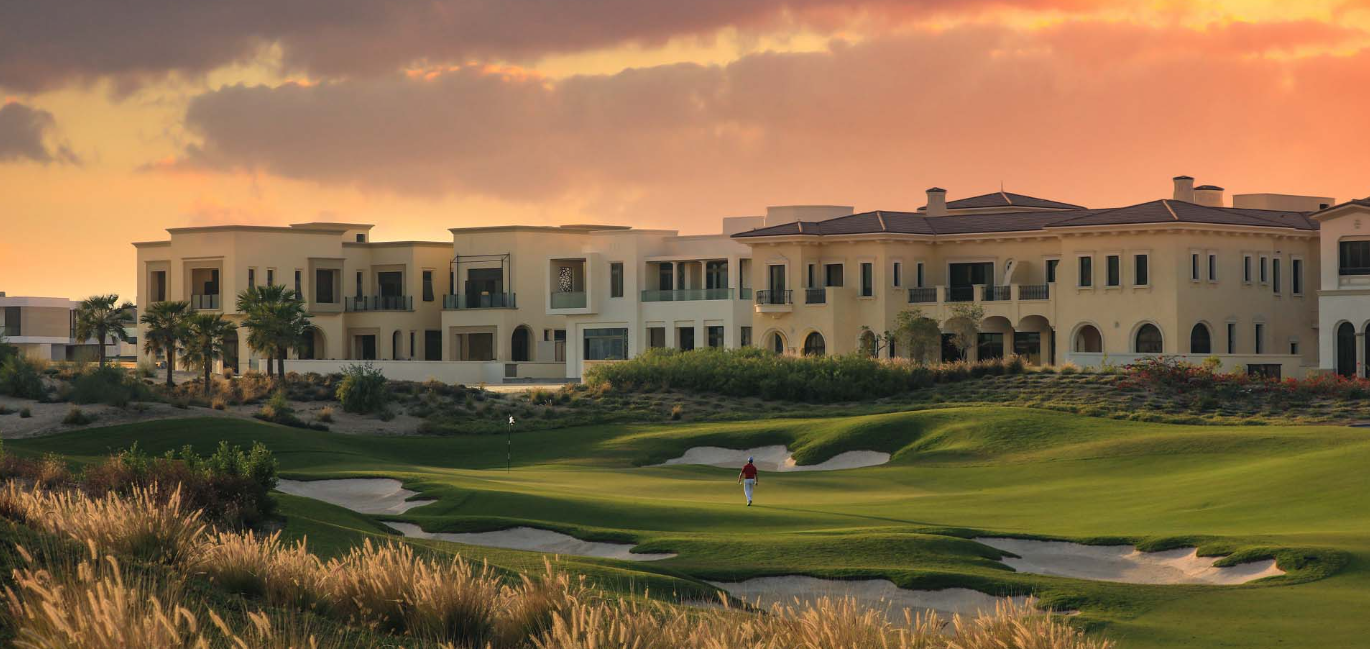
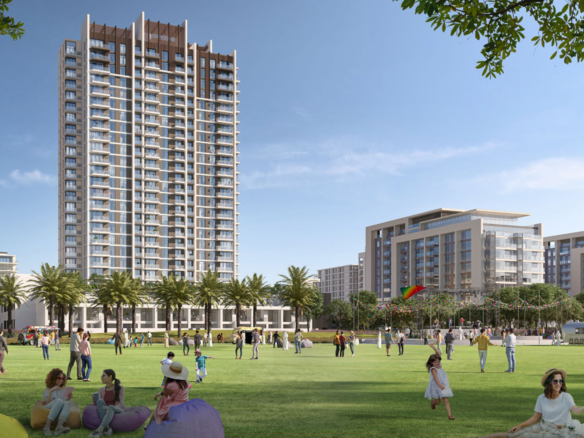
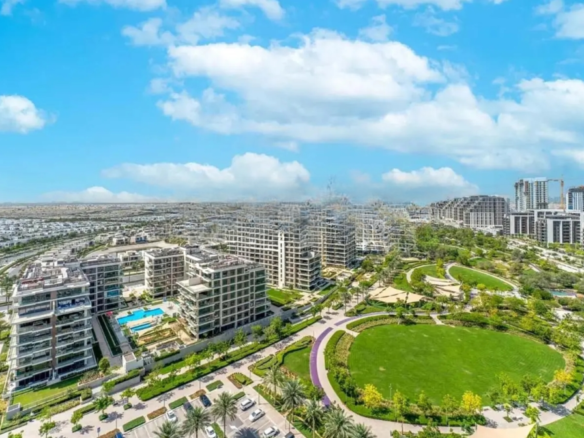
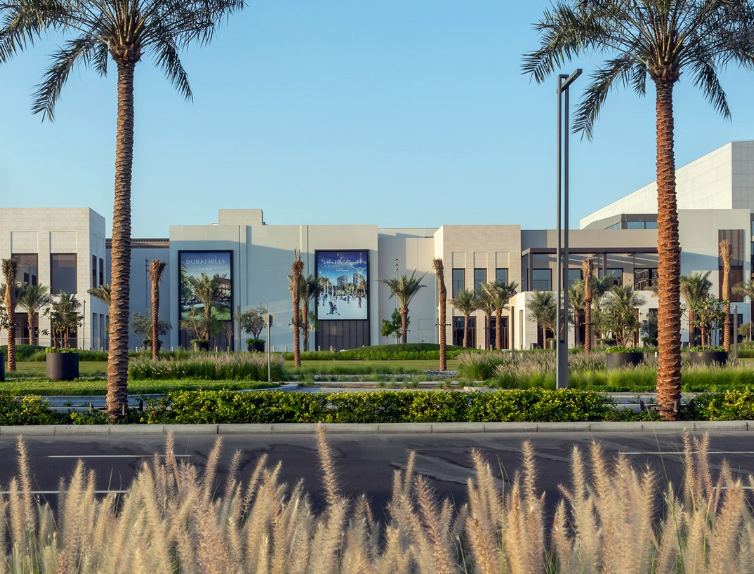
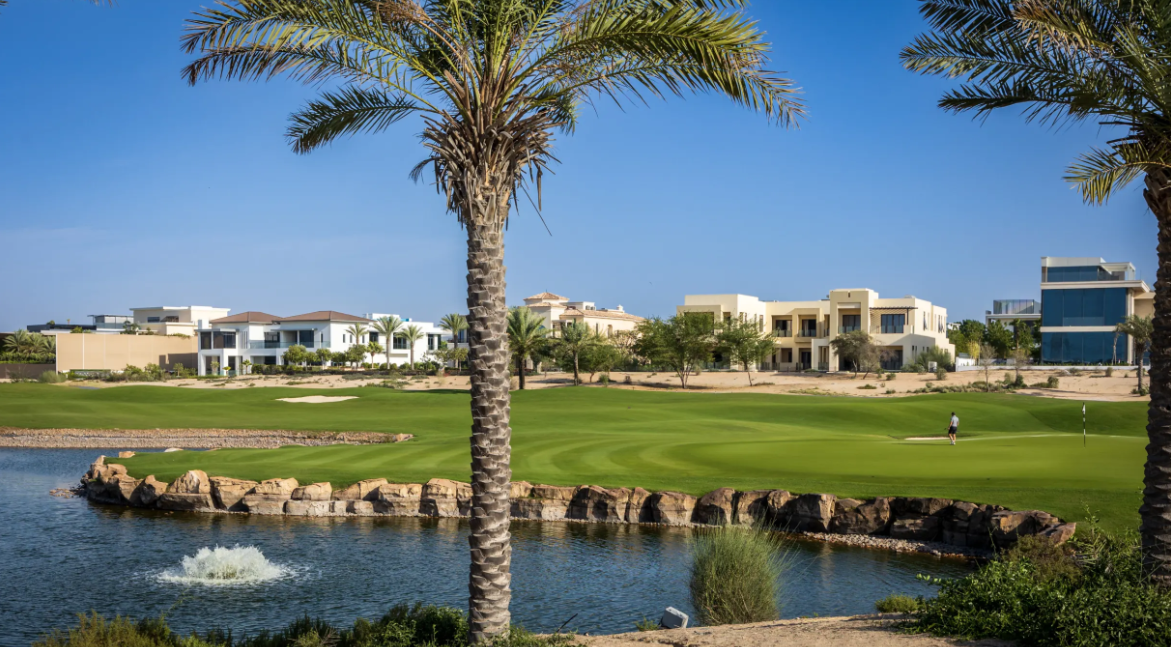
At the centre sits an 18-hole championship golf course covering 1.2 million square metres, laid out by European Golf Design. Residential clusters wrap around it, alongside schools, hospitals, the 2-million-square-foot Dubai Hills Mall (open since February 2022), and the 180,000-square-metre Dubai Hills Park — the green space that earned the community its “Green Heart of Dubai” tagline.
It’s one of the rare cases in Dubai where the brochure copy and the lived experience actually line up.
THE SUB-COMMUNITIES — AND WHY TREATING THEM AS ONE MARKET IS A MISTAKE
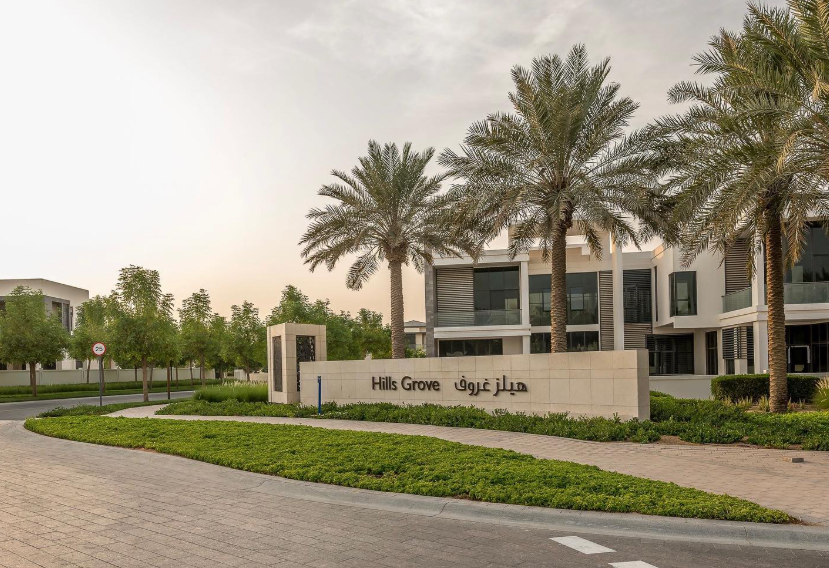
Dubai Hills Estate breaks down into more than two dozen distinct sub-communities, each carrying its own price band, character, and buyer type. Lumping them together is the same analytical error people make with Business Bay — different pockets behave like entirely separate markets.
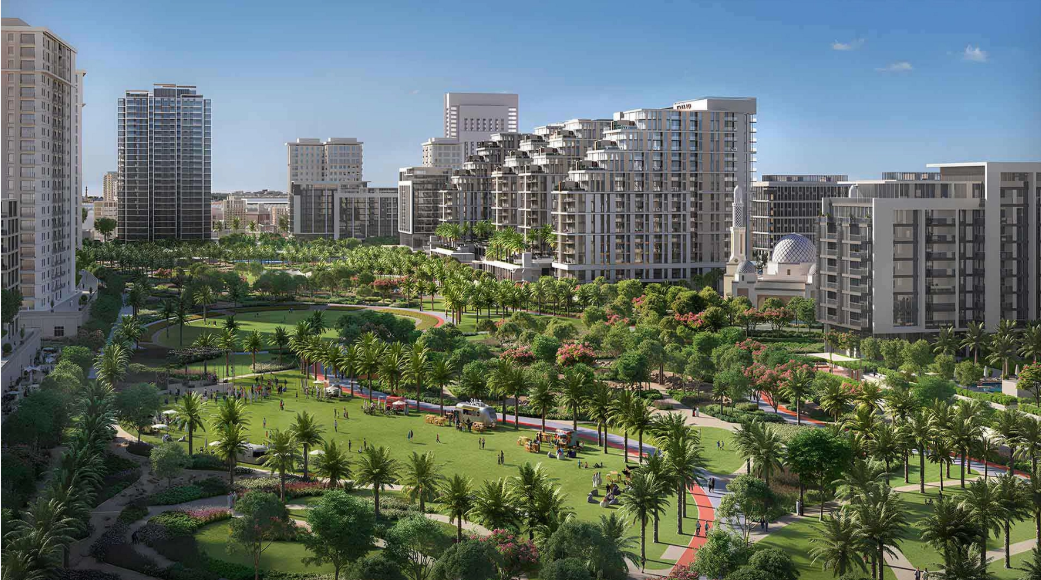
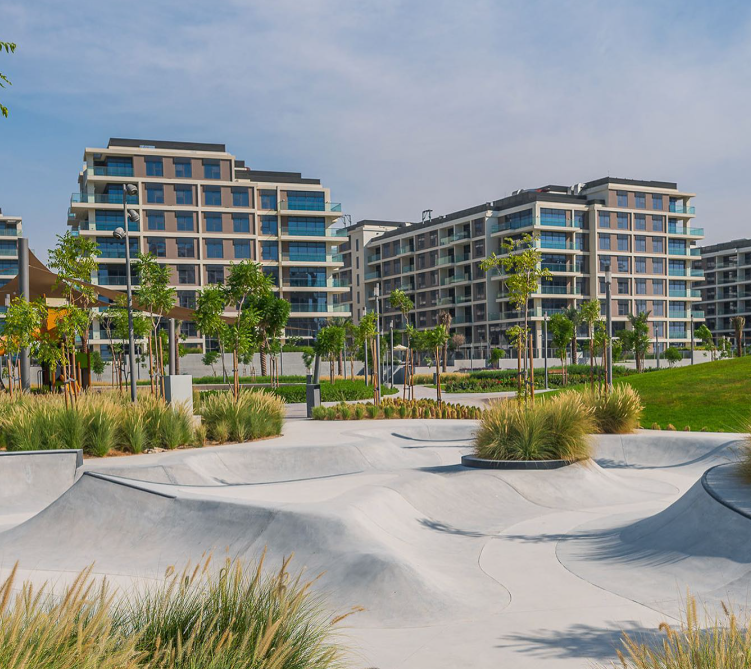
Park Heights and Park Heights II sit directly opposite Dubai Hills Park, a short walk from the mall. This is where the bulk of apartment transactions and rental supply originate, and typically where the cheapest entry point into Dubai Hills sits. The buyer mix here splits between end-users wanting family-friendly apartment living and investors chasing stable yield. Park Heights also moves the fastest of any sub-zone when units are priced right.
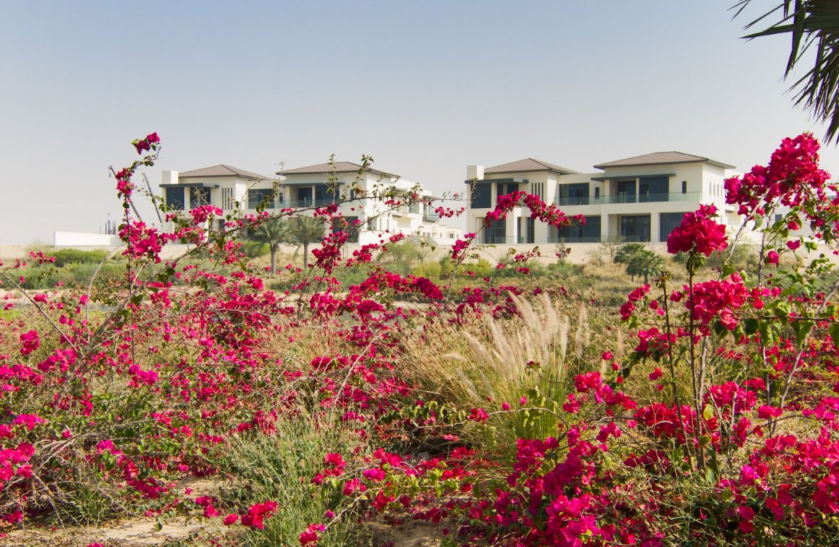
Park Point and Mulberry came slightly later and sit at a more boutique scale than Park Heights. Park Point hugs the park itself and commands a premium for direct views; Mulberry occupies a quieter residential corner. Both draw a similar buyer to Park Heights, just at a marginally higher price floor.
Collective and Collective 2.0 represent Emaar’s value play within Dubai Hills — smaller units, lighter service charges, aimed at younger professionals and first-time investors. Ironically, these often post the strongest yields in the entire community, simply because the entry price is lower.
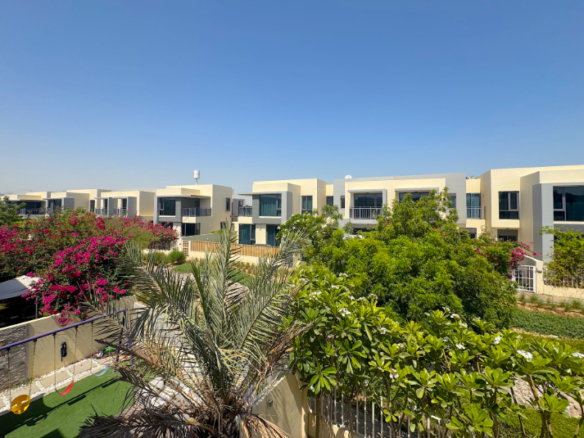
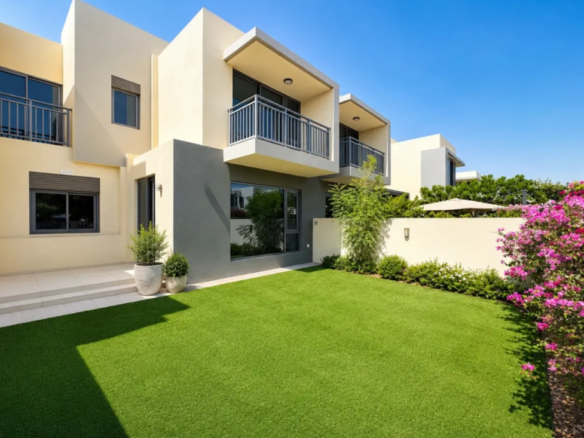
Maple (across its three phases) and Sidra Villas form the townhouse-and-villa core. Maple delivers 3 to 5-bedroom contemporary townhouses arranged around shared green space; Sidra offers standalone villas with private gardens. Both are dominated by owner-occupiers rather than investors, which means low turnover, steady pricing, and genuinely scarce supply whenever something does list.
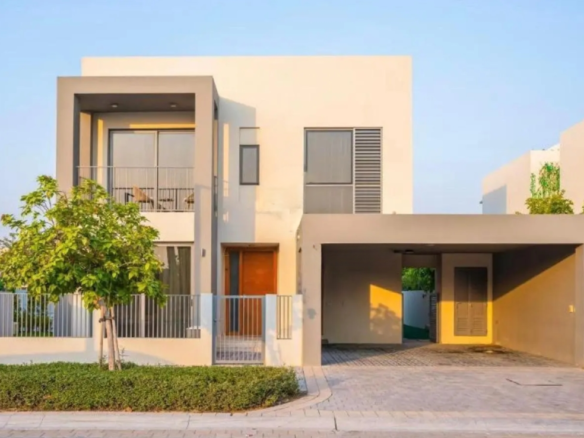
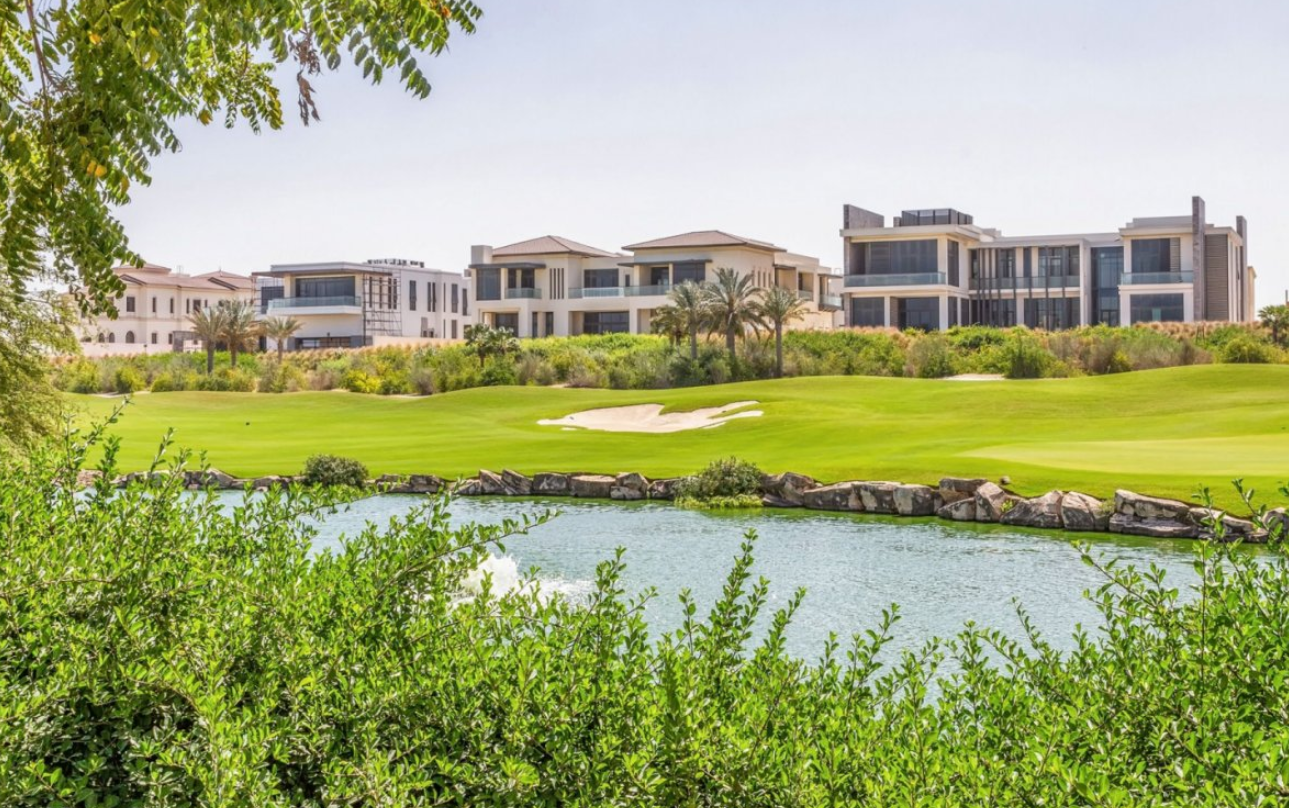
Golf Place, Parkways, and Fairway Vistas sit at the top of the pyramid — standalone villas facing the fairways, 5 to 7+ bedrooms, priced anywhere from AED 15M into the AED 50M+ range for the largest plots. This is trophy real estate: almost no resale churn, end-user dominated, and pricing that’s started to track closer to Emirates Hills than to typical Dubai resale stock.
A handful of additional pockets — Maple, Club Villas, Acacia, Hillside among them — fill out the remaining price tiers and family profiles, each with its own internal pedestrian network, parks, and school catchment.
The single most useful question to ask before buying in Dubai Hills isn’t “what’s the price per square foot” — it’s “which cluster am I actually in.” That tells you more about resale speed and rental demand than the headline price ever will.
WHO ACTUALLY LIVES HERE
Spend a Saturday morning walking Dubai Hills and the contrast with Marina or Business Bay is immediate. Families everywhere. Parents cycling the 54 kilometres of internal paths with kids in tow. Dogs on leashes along the park edges. A school-run rush around 7:30am, a second wave of office commuters at 8, and joggers using the parks from sunrise to well after dark.
The demographic centres on established professional households — couples in their thirties and forties, one to three children, frequently dual-income with at least one partner working in one of Dubai’s central business districts. There’s a noticeable concentration of European, North American, and East Asian end-users. Of all of Dubai’s premium communities, Dubai Hills has the lowest share of pure investors — by design. Emaar structured unit sizing, payment plans, and pricing specifically to reward long-term holders over flippers.
What’s largely absent: short-term rental turnover, a party scene, or transient renters cycling in and out every few months. This is a community built for people who intend to stay.
That demographic profile shapes the rental market directly. Turnover runs lower than Marina or Business Bay, tenancy contracts run longer, and family-sized units — 2 to 3-bedroom apartments, townhouses, villas — command the rental premium. Studios and 1-bedrooms aimed at single professionals perform noticeably weaker here than elsewhere in Dubai. If yield is the goal, unit type matters here almost as much as location does.
CONNECTIVITY
Dubai Hills sits at the intersection of two major arteries — Al Khail Road (E44) along its southern edge and Umm Suqeim Street running east-west through it. That positions the community roughly 15 minutes from Downtown Dubai, 20 from Dubai Marina, 25 from DXB, and somewhere around 30 to 35 minutes from the newer Al Maktoum International Airport.
The metro doesn’t reach Dubai Hills yet — that’s the community’s most cited limitation. The Dubai 2040 Urban Master Plan does include a future metro extension connecting the area into the Red Line, with a target window in the late 2020s, but for now it remains a planned rather than delivered piece of infrastructure.
Inside the boundaries, though, the planning logic flips: this is built for walking and cycling first, driving second — a genuine departure from how most of Dubai is laid out. The 54 kilometres of cycling routes, wide pavements, and shaded walkways mean daily errands rarely require a car. Residents can reach the mall, the park, schools, and most restaurants on foot without crossing a major road.
The practical read: Dubai Hills suits buyers comfortable trading a 15-minute drive to the city centre for a community that’s actually walkable day to day. Anyone who wants metro access on their doorstep should look elsewhere until that extension materialises.
BUILDING STOCK AND TIMELINE
Dubai Hills doesn’t carry the dramatic generational gaps you find in Business Bay. The masterplan launched in 2012, broke ground in 2013–2014, and has been delivered in continuous phases since — most apartment towers post-2018, most villas and townhouses post-2017. Emaar holds construction standards consistent across the entire masterplan, which removes the “identical price, wildly different build quality” problem common in Dubai’s older districts.
The real dividing line isn’t old versus new stock — it’s whether a building was delivered before or after the surrounding amenity infrastructure matured. Anything completed before 2022 launched without Dubai Hills Mall in place. Anything after 2022 arrived into a community that already had the mall, the park, schools, and a hospital fully operational — and those later deliveries command a premium precisely because the lifestyle is already complete rather than promised on a brochure.
THE LONG-TERM PICTURE
Dubai Hills Estate sits inside the broader Mohammed Bin Rashid City framework and is named explicitly as a core residential anchor in the Dubai 2040 Urban Master Plan. That 2040 designation locks in continued infrastructure spending, expanded retail, additional schools and healthcare, and the planned metro extension.
For buyers, the practical implication is that this masterplan carries government-level protection for the next two decades. Unlike peripheral communities that depend entirely on a single developer staying committed, Dubai Hills sits inside Dubai’s official urban roadmap — meaning future transport, infrastructure, and amenity decisions are structurally aligned in the community’s favour rather than working against it.
The macro risk here is about as low as it gets in Dubai. The real decision-making happens at the micro level — which sub-community, which building, which specific unit.
THE ADVANTAGES
Built around families from day one, not retrofitted for them. Schools (Gems Wellington, Kings’ School Al Barsha, Repton, all inside the community), King’s College Hospital London Dubai, parks, cycling infrastructure, and retail are already operating, not pending.
Lifestyle infrastructure that’s finished, not promised. Dubai Hills Mall, Dubai Hills Park, and the golf club are all running at full capacity today.
A masterplan you can actually walk. Daily errands on foot are realistic here in a way they aren’t almost anywhere else in Dubai, helped by 54 kilometres of internal cycling routes.
Genuinely central. 15 minutes to Downtown, 20 to Dubai Marina, 25 to DXB — sitting between the city’s two main hubs rather than off to one side.
Backed at the government level. Folded into Mohammed Bin Rashid City and named directly in the Dubai 2040 plan, with long-term capital commitment attached.
Construction quality that doesn’t vary by phase. Emaar runs the same build standards across every sub-community, narrowing the build-risk gap between buildings that plagues older parts of the city.
Capital appreciation that’s held up. Dubai Hills has outpaced Dubai’s average price growth over the past five years, with comparatively limited downside even through softer market stretches.
The widest price ladder of any premium Dubai community — apartments from roughly AED 1.3M up to villas well past AED 50M.
THE DRAWBACKS
No metro, not yet. The extension is on the 2040 roadmap but undelivered — for now, anything outside the community boundaries requires a car.
Weak fit for short-term rental operators. This is a long-term-resident community, not a holiday-home market, and nightly-rate yields trail Marina, Business Bay, and Downtown by a wide margin.
A premium price per square foot. That premium reflects genuinely finished infrastructure, but buyers hunting for the cheapest possible entry into Dubai’s top tier will find better value in less complete communities.
Smaller units underperform. The family-skewed demographic means studios and 1-bedrooms have a noticeably thinner tenant pool than equivalent units in Marina or JVC.
Sub-community differences matter more than most buyers assume. Two apartments priced identically in different Dubai Hills clusters can carry very different rental demand and resale speed — broad statements about “Dubai Hills” tend to fall apart under closer inspection.
Villa liquidity runs thin. The family-occupied nature of the villa stock means fewer transactions surface — a double-edged trait that stabilises pricing but can slow down an exit if one is needed quickly.
WHY THIS MATTERS FOR OFF-MARKET SOURCING
Dubai Hills generates a fundamentally different type of off-market opportunity than Business Bay does. In Business Bay, distress comes from over-leveraged investors who misjudged their yield math. In Dubai Hills, the seller motivation is almost always personal rather than financial — divorce, relocation, inheritance, a school change, a family that’s outgrown the unit or shrunk past needing it. With so few pure investors in the mix, motivated-seller situations here are rarely about money trouble.
That has two practical consequences. First, pricing on Dubai Hills off-market deals tends to sit slightly above what you’d see in investor-distress situations elsewhere — these sellers aren’t desperate, just motivated — but the properties themselves are usually in better condition, since they’re lived-in, maintained, owner-furnished homes rather than investor units that have churned through a string of tenants. Second, timing is unforgiving: because supply is this constrained, qualified buyers move on a listing the moment it appears, and the window to act closes fast.
This is the layer of the Dubai Hills market that never surfaces on Bayut or Property Finder — and it’s exactly where the real off-market opportunities in this community are found.
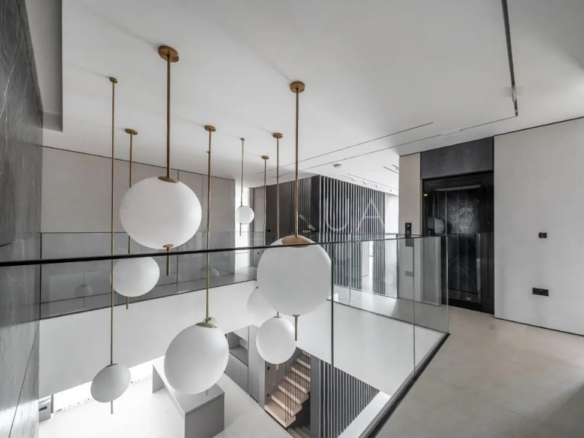
THE EMERALD HILLS | CUSTOM-BUILT 4 BEDROOM | CONTEMPORARY VILLA, DUBAI HILLS ESTATE
Emerald Hills | Emaar - Dubai - United Arab EmiratesCustom-built 4-bedroom contemporary villa in Emerald Hills, Dubai Hills Estate, over four...

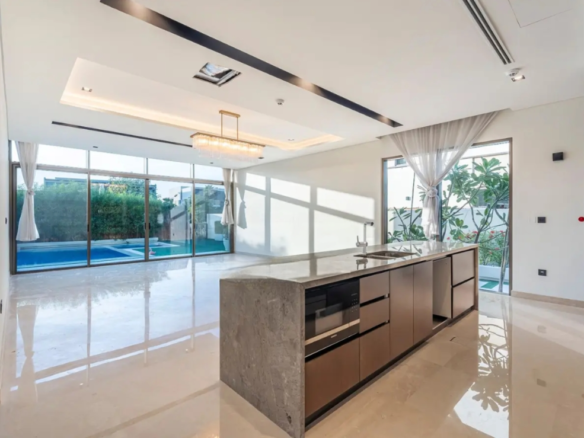
THE GOLF PLACE 1 | 4 BEDROOM STANDALONE VILLA | PRIVATE POOL, DUBAI HILLS ESTATE
Golf Place 1Extended 4-bedroom standalone villa in Golf Place 1, Dubai Hills Estate: around...

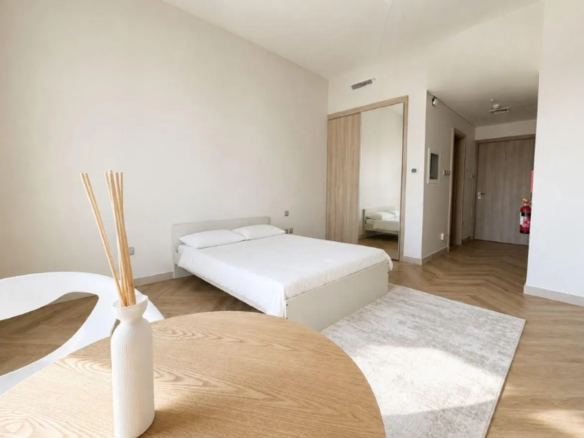
PARK HEIGHTS | Bright | Unfurnished | High floor | Mint condition |
Presenting this bright 1 Bedroom Apartment for Rent — Park Heights, Dubai...

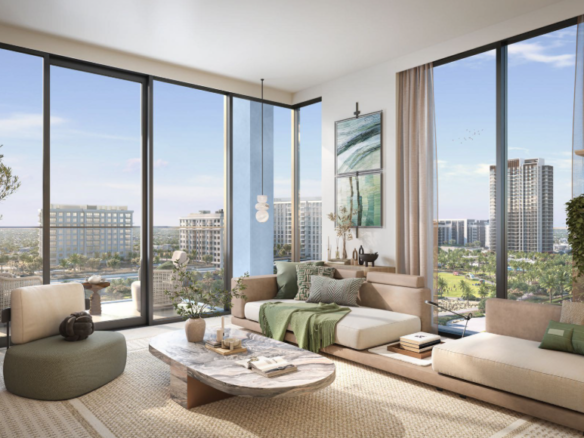
CORNER | POOL & SKYLINE VIEW | VIDA RESIDENCES DUBAI HILLS
Vida Residences at Dubai Hills Estate - Dubai - United Arab Emirates**Rare corner 2-bed at Vida Residences, Dubai Hills Estate — about to...
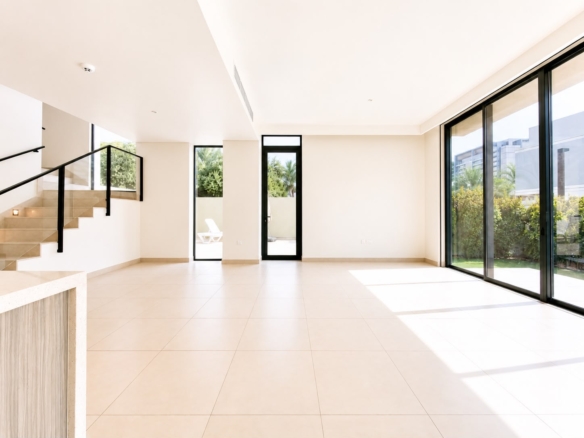
Club Villas | 3BR | Corner Plot
Club Villas at Dubai Hills - Dubai - United Arab Emirates3 Bedroom Villa for Rent — Club Villas, Dubai Hills Estate |...
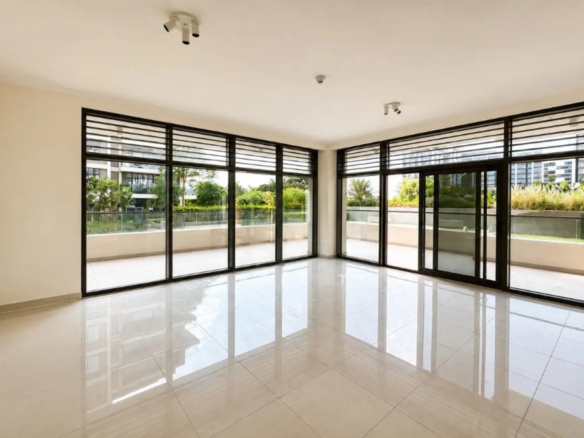
PARK FACING | BIGGER LAYOUT | CORNER 3BR | MULBERRY
Mulberry 1 Emirates Garden 2 - Dubai - United Arab EmiratesVacant, corner, park-facing 3BR at Emaar's Mulberry in Park Heights, Dubai Hills...
THE EMERALD HILLS | CUSTOM-BUILT 4 BEDROOM | CONTEMPORARY VILLA, DUBAI HILLS ESTATE
Emerald Hills | Emaar - Dubai - United Arab EmiratesCustom-built 4-bedroom contemporary villa in Emerald Hills, Dubai Hills Estate, over four...
THE GOLF PLACE 1 | 4 BEDROOM STANDALONE VILLA | PRIVATE POOL, DUBAI HILLS ESTATE
Golf Place 1Extended 4-bedroom standalone villa in Golf Place 1, Dubai Hills Estate: around...
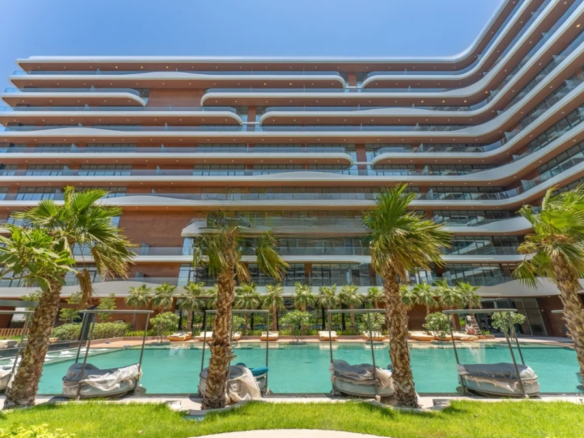
Golf Residency by Fortimo | Pool view | Super Large
The Golf Residence by Fortimo - Dubai - United Arab EmiratesSpacious 1BR with a large terrace and pool views in the just...
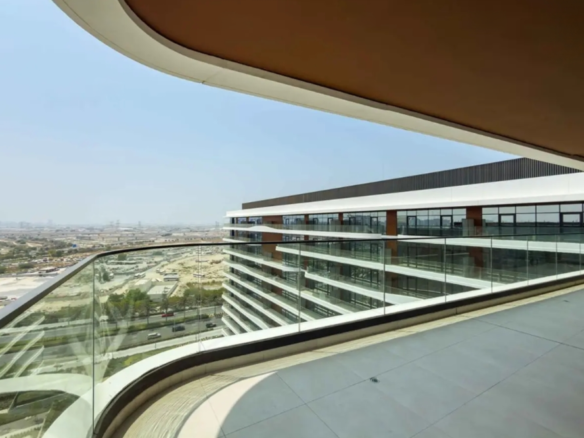
Corner | Golf & Pool view | Golf Residence by Fortimo
The Golf Residence by Fortimo - Dubai - United Arab EmiratesPresenting this bright and spacious brand new 2-bedroom apartment in Golf Residences...
PARK HEIGHTS | Bright | Unfurnished | High floor | Mint condition |
Presenting this bright 1 Bedroom Apartment for Rent — Park Heights, Dubai...
CORNER | POOL & SKYLINE VIEW | VIDA RESIDENCES DUBAI HILLS
Vida Residences at Dubai Hills Estate - Dubai - United Arab Emirates**Rare corner 2-bed at Vida Residences, Dubai Hills Estate — about to...
Let's get in touch - I reply in 24 hrs